A Pianist’s Story
Updated on Sep 21, at 17:45
A Pianist’s Story
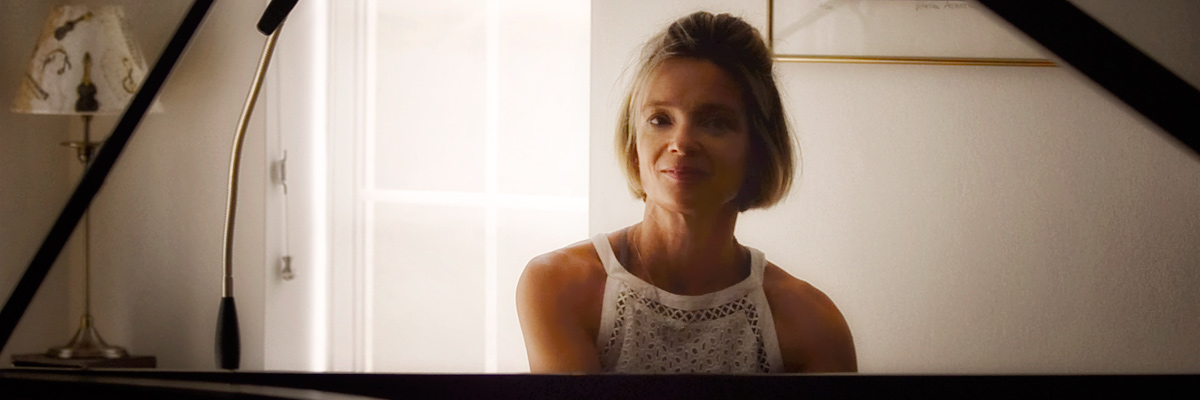
P ianist Rae de Lisle was reaching for her professional concert career in London when she suffered an extraordinary injury in the midst of performing at her debut recital at Wigmore Hall. When I first heard this story, I was just fifteen — one of her many promising students — and it was unforgettable. What I didn’t know then was that, fifteen years later, I would find myself training as an Alexander Technique teacher.
Wigmore Hall is a much-loved London venue for classical musicians and music lovers alike, so performing a debut recital there is a significant milestone. Rae was practising hard for her upcoming date, now just a few weeks away. The programme was demanding, featuring a Bartók concerto that required impeccable technique through a series of awkward hand positions.
Partway through her lead-up to the concert, Rae’s teacher noticed a change in the sound she was making at the piano and said, “I can hear pain in your arms.” It was decided she must stop for several weeks to rest, then bring the pieces back up to speed in the final few days before the concert.
This she did — and reached the day of performance. In the middle of the recital there came a moment of critical transition, and Rae suffered a catastrophic performance injury. In her words to me: “It felt like a gun had gone off inside both arms.”
She somehow finished the concert, no doubt terrified of what had happened, and with the dreadful sensation that an irreversible bridge had been crossed. When she awoke the next morning, her arms were black and blue from fingertip to shoulder and swollen to twice their normal size.
It was a disastrous prospect for a burgeoning concert pianist, and became all the more poignant over the following months as nothing seemed to reduce the swelling. Playing the piano was impossible.
She finally tried an Alexander Technique teacher — this was back in the early 1970s, when teachers were still few and far between, and the Technique itself was regarded with some scepticism.
Within half an hour of her first lesson, the swelling in both arms had almost completely subsided. The teacher, as surprised as Rae, described it as an exceptionally rapid and satisfying result — seemingly miraculous.
Rae continued with the re-educational process of the Technique, and over time she was able to return not only to playing, but to performing once again.