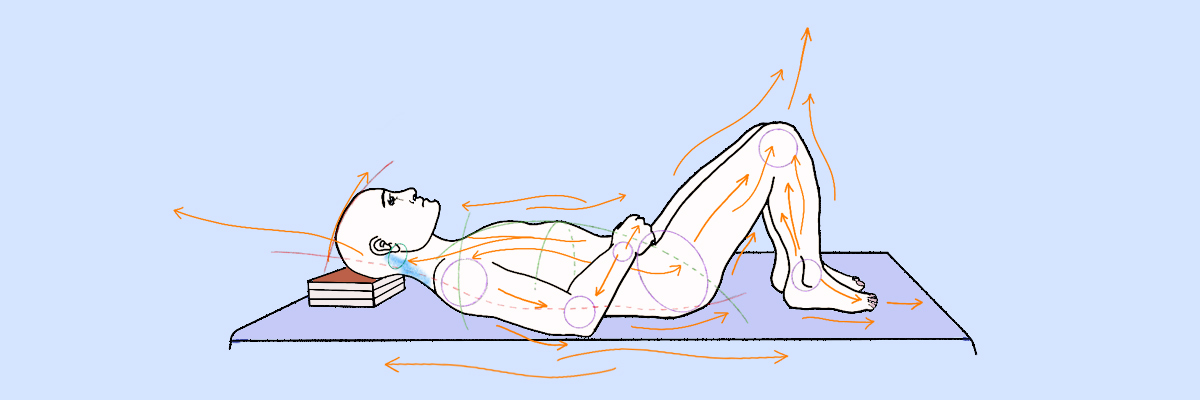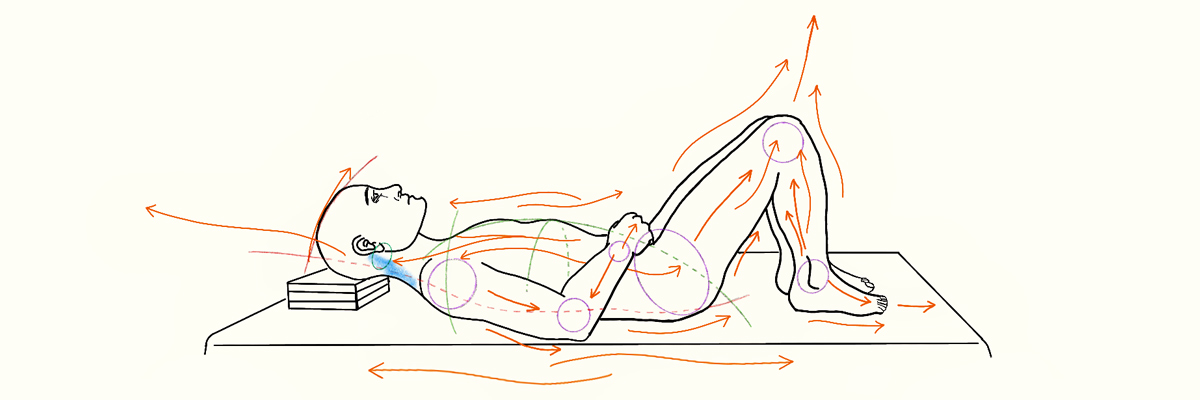
Frozen Shoulder
Case History: Frozen Shoulder
Updated on Oct 5, 2025 at 10:56
Audrey T. came for lessons out of general interest, having heard from a friend that the Alexander Technique is “a good way to make life easier.” Lessons progressed in an easy fashion, laying the foundation for a basic understanding of how our response to a stimulus profoundly affects our ability to deal with it.
This changing perception gently led to a state of mind and body that was much freer, and with it came a sense that life is a kind process.
Around the eighth lesson, Audrey came in with something to report. The frozen shoulder she had endured for some time – but had learned to “put up with” – had suddenly, and quite spontaneously, resolved. It had long passed its acute stage of extremely limited movement, but each day it still affected her, preventing simple tasks such as getting dressed.
“I had no idea this could ever improve, but one morning I was suddenly able to reach round and easily undo my bra clasp!”
The doctors had told her she would need to learn to live with the problem.
Outcomes like this are not uncommon in Alexander lessons. The tension and habit patterns that shape how we live and move are often underestimated in their effect on overall functioning. The usual cultural response to injuries such as frozen shoulder is to seek forcing measures – to try to beat the body into submission. Yet, as the forcing process is often the very foundation of tension-induced strain, it can be a bit like trying to put out a fire with liquid petroleum gas.
Next case history: Repetitive Strain Injury